Cambridge psychologist warns against blanket social media ban for under-16s
Cambridge psychologist warns against blanket social media ban for under-16s
Professor Sander van der Linden has argued that such a ban would have numerous unintended consequences
by Antara Rao
Monday June 1 2026, 10:13pm
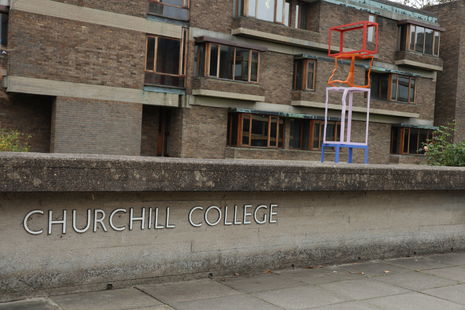
Professor Sander van der Linden, a Cambridge social psychologist and fellow at Churchill College, has warned against calls for a blanket social media ban for children, arguing that regulation should instead focus on “safety-by-design” and gradual digital exposure.
Van der Linden’s intervention, spotlighted on the University’s social media on Wednesday (27/05), comes amid extensive parliamentary discussions and government consultations about whether the UK should implement a social media ban.
On Tuesday (26/05), Prime Minister Sir Keir Starmer held a consultation with families and campaigners, and vowed to take “decisive” action against the impact of social media on children in the UK. According to senior ministers, a social media ban could be enforced “within weeks”.
In 2024, Australia announced the introduction of a social media ban for under-16s. Brazil and Indonesia introduced similar restrictions on social media usage by under-16s this year.
Van der Linden has argued that a ban on social media would act as a blunt tool, and would carry many unintended consequences.
He claimed that social media can pose grave risks, including the threats of misinformation and social comparison, and said that there are small negative correlations between the use of social media and the mental health of adolescents. However, he maintained that there is insubstantial evidence that schools with social media bans have better mental health among students than schools that do not restrict usage, and that the psychological effects of restriction also depend heavily on how limits are implemented.
According to the professor, a voluntary detox from social media can be effective, but bans that restrict the agency of young people could lead to detrimental psychological impacts.
Van der Linden noted that social media comes with benefits such as social connection, allowing young people from diverse backgrounds to connect with like-minded people. He added that this is particularly important for those who are part of minority groups, including those in the LGBTQIA+ community, who may rely on social media networks for emotional and social support.
The social psychologist instead proposed an alternative, “scalpel-based” approach that emphasises the importance of long-term investment in the digital confidence of young people, and pressuring social media companies to embed “safety-by-design” mechanisms.
Van der Linden recommended that young people be exposed to digital devices from as early as four years old, through age-appropriate activities like viewing family photos, reading, and drawing. He argued they can then progress to using social media for interactive, educational content, before joining simulated social media networks, and eventually being able to manage independent online interaction.
The academic also stated that social media companies must be held more accountable, and that responsibility for the safety and wellbeing of children should not solely be placed in the hands of parents and teachers.
Cambridge psychologist to co-lead study on social media's mental health impact
He argued that social media platforms should focus on “safety-by-design,” adding that children should only have access to safe, highly regulated feeds, with clean, non-violent, and non-sexual content. This, he said, would enable them to manage their social lives and engage with issues of social and political significance, while minimising exposure to harmful and exploitative content.
Van der Linden concluded that restrictions should function less as permanent prohibitions, and more as “smart levers” to pressure technology companies into building safer platforms for children. He suggested that governments could require companies to undergo transparent, independent audits proving that their recommendation systems and feeds meet child-safety standards, before allowing them to provide services to under-16s.
Support Varsity
Varsity is the independent newspaper for the University of Cambridge, established in its current form in 1947. In order to maintain our editorial independence, our print newspaper and news website receives no funding from the University of Cambridge or its constituent Colleges.
We are therefore almost entirely reliant on advertising for funding and we expect to have a tough few months and years ahead.
In spite of this situation, we are going to look at inventive ways to look at serving our readership with digital content and of course in print too!
Therefore we are asking our readers, if they wish, to make a donation from as little as £1, to help with our running costs. Many thanks, we hope you can help!
- Comment / The Cambridge drift1 June 2026
- News / Cambridge psychologist warns against blanket social media ban for under-16s1 June 2026
- News / University support staff strikes end after month of action2 June 2026
- News / News in Brief: Corpus climbing, climate cash, and commendable contributions1 June 2026
- Music / We need to talk about Kendrick2 June 2026
- Comment / Top of the slops: the competitiveness of college dining4 June 2026
- Interviews / Bible Scholar Mattie Mae Motl: “God is a woman”4 June 2026
- Features / One big happy (college) family?4 June 2026
- Theatre / Bold beginnings in the Corpus Playroom 3 June 2026
- Music / We need to talk about Kendrick2 June 2026
Partner Links
Sponsored Links